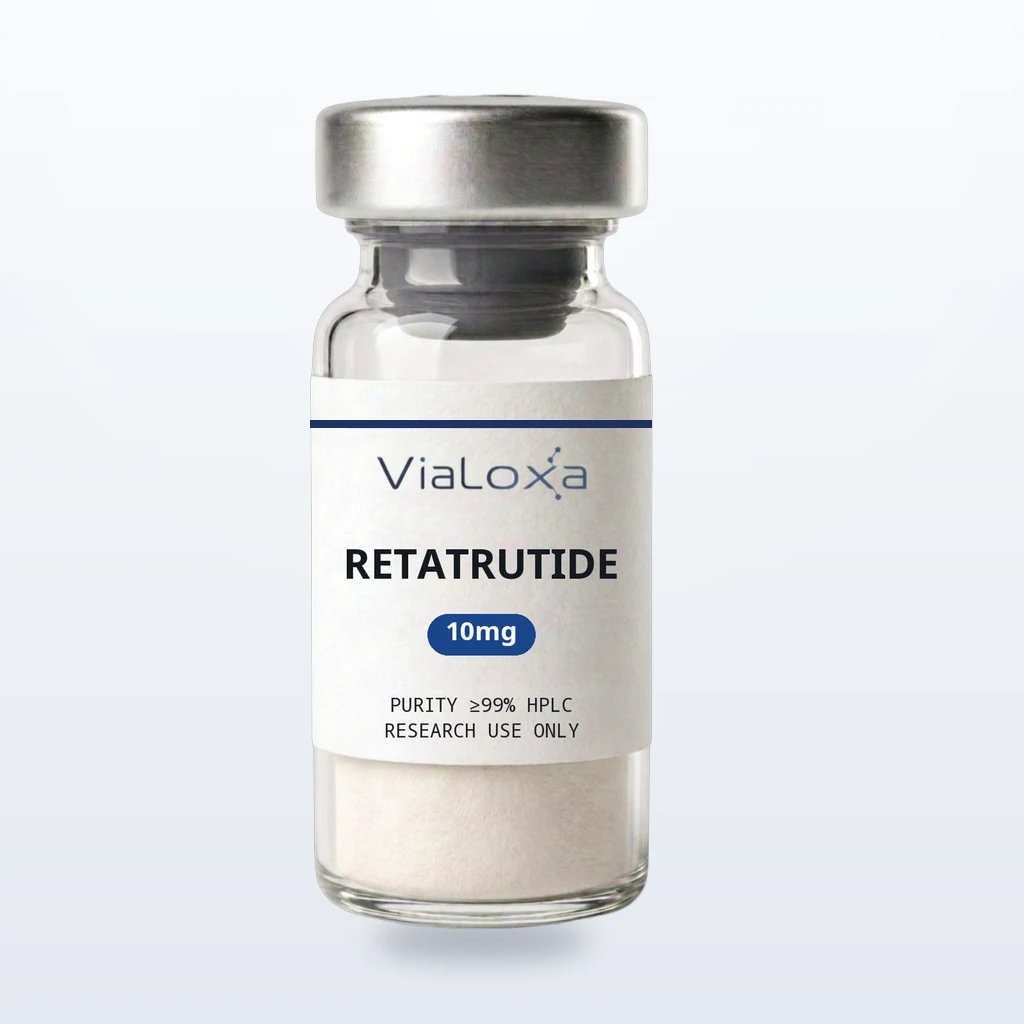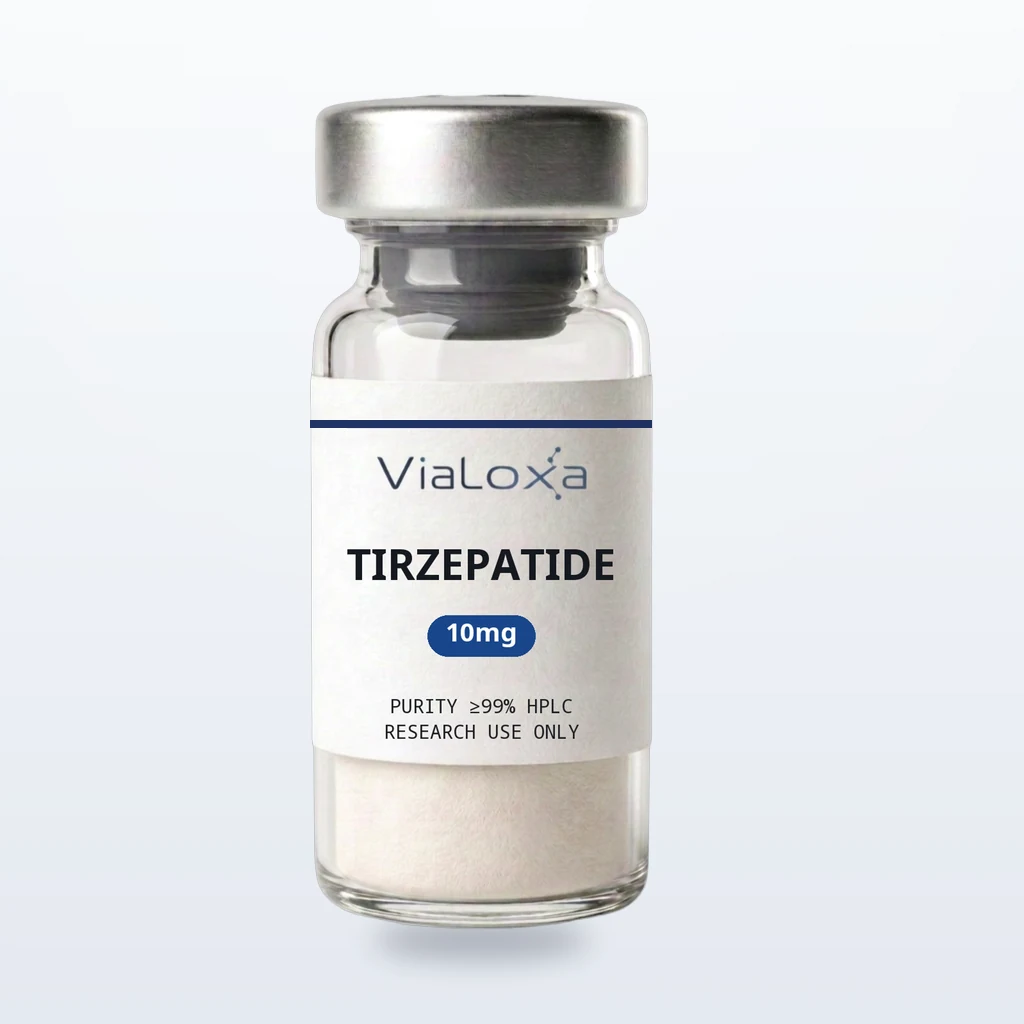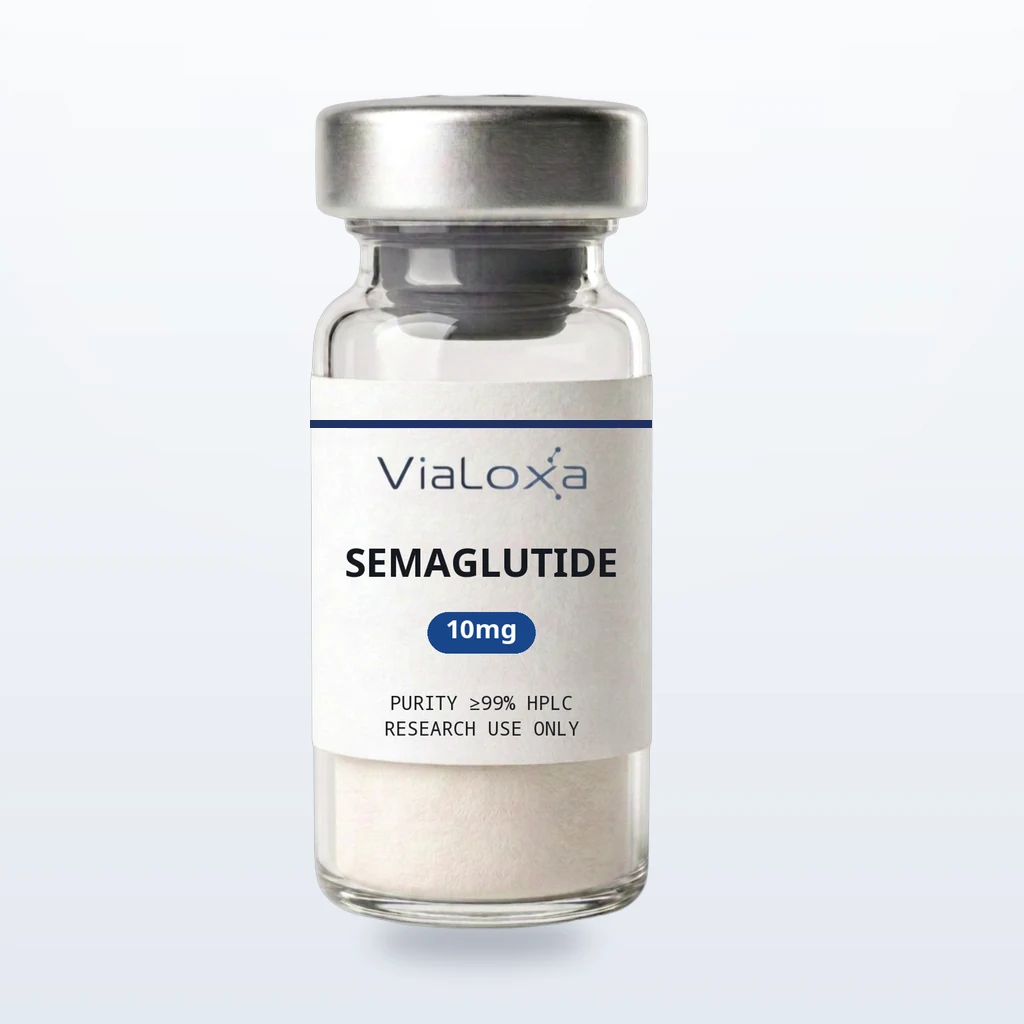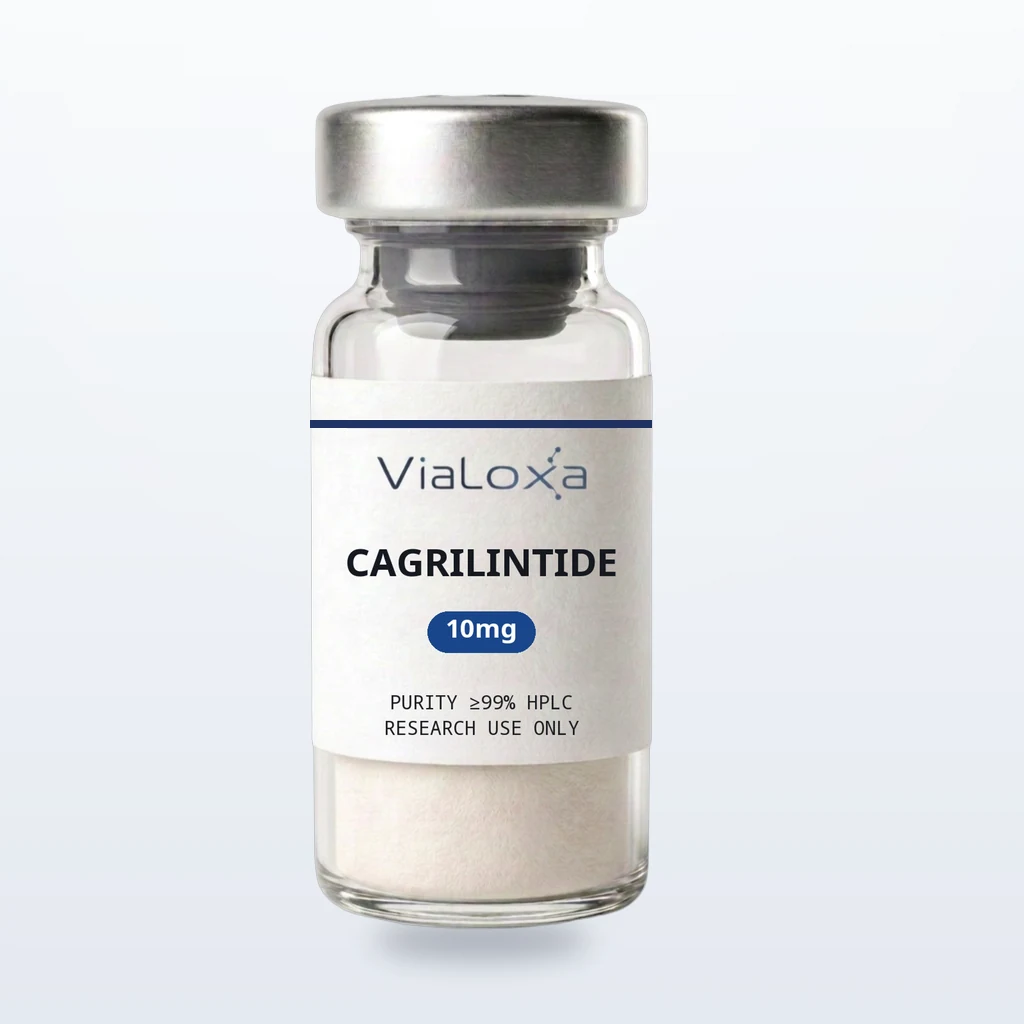

Semaglutide, tirzepatide and retatrutide are usually discussed as three generations of the same idea, but as reference standards they behave as three distinct analytical problems. Each engages a different set of receptors, each has a different backbone and lipidation strategy, and each elutes differently on a reverse-phase column.
This comparison is written for laboratories holding these compounds as reference material - for receptor-selectivity panels, chromatographic method development and stability work. These are unlicensed reference standards for in-vitro research only, and nothing here describes clinical use.
Receptor targets: one, two, three
Semaglutide is a GLP-1 receptor agonist alone. Tirzepatide engages both the GIP and GLP-1 receptors, making it a dual agonist. Retatrutide adds glucagon receptor activity on top of those two, giving a triple agonist.
That progression is why laboratories tend to hold all three rather than choosing between them. A selectivity panel needs a comparator at each level of the class, otherwise there is no way to attribute an observed effect to a specific receptor arm.
- Semaglutide - GLP-1 only
- Tirzepatide - GIP and GLP-1
- Retatrutide - GIP, GLP-1 and glucagon
- Cagrilintide - amylin, frequently paired with the above as a contrast
Structural differences that matter analytically
Semaglutide is a GLP-1 backbone with substitutions at positions 8 and 34 and a C18 diacid attached via a spacer at position 26. Tirzepatide is built on a GIP backbone with a C20 diacid and non-standard aminoisobutyric acid residues. Retatrutide is a GIP-based backbone carrying its own lipid modification and further engineered residues.
For method development the lipid chains dominate behaviour. All three are strongly retained on C18 and need a high organic proportion to elute, and all three show tailing on columns that are not endcapped well. The non-standard residues also mean tryptic digestion maps differ from what a naive prediction would give.
Handling and solubility
All three are supplied lyophilised and reconstitute cleanly in bacteriostatic water at typical reference concentrations. The lipidated members of the class are more surface-active than a plain peptide, so foaming during reconstitution is a genuine risk - add diluent down the vial wall and swirl rather than shake.
Adsorption losses at dilute concentrations are also more pronounced for this class than for short unmodified sequences. Prepare working dilutions in low-binding tubes and prepare them fresh where the assay allows it.
Which reference to hold
If the work is method validation for a single analyte, hold that analyte and one close structural neighbour so the method can be shown to resolve them. If the work is receptor pharmacology, hold the full ladder, because the interpretive value comes from the contrast between agonist profiles.
Blended references - semaglutide with cagrilintide, for example - are assayed and certified as supplied, which removes a weighing step for protocols that always use a fixed combination.
Receptor coverage and why it changes the experiment
The practical difference between these three reference standards is how many incretin receptors each engages. Semaglutide is a single-receptor GLP-1 analogue, tirzepatide adds GIP receptor activity, and retatrutide extends further to glucagon receptor engagement. Each additional receptor changes which readouts are informative and which controls a study design needs.
In a single-receptor system that only expresses GLP-1 receptor, all three will produce signal, and the results will say very little about what distinguishes them. Designs that isolate each receptor separately, or that use selective antagonists, are what turn a comparison into data rather than a demonstration.
Handling differences at the bench
All three are lipidated or otherwise modified to extend half-life, and that modification affects solubility behaviour. They dissolve readily in bacteriostatic water but are more surface-active than short unmodified sequences, which means foaming during reconstitution is easier to cause and more damaging when it happens.
Add diluent down the vial wall, swirl rather than shake, and allow a minute or two of standing time before judging whether the cake has cleared. Adsorption losses in dilute working solutions are also more pronounced with these sequences, so low-binding plasticware or glass is worth the small additional cost.
Comparing certificates across the three
When these compounds are compared in the same study, the certificate of analysis figures need to be read side by side before any dilution is made. Net peptide content commonly differs by several percentage points between them, and a comparison built on gross label mass silently compares different molar quantities.
Convert to molar concentration rather than mass concentration wherever the study permits. The three molecules differ substantially in molecular weight, so equal mass concentrations are not equal molar concentrations, and receptor pharmacology is a molar phenomenon.
- Read net peptide content for each lot before diluting
- Convert mass to molar using the molecular weight on the certificate
- Match purity grade across arms where possible
- Record lot numbers alongside the results, not just the compound names
Storage across a multi-arm study
A comparison that runs for weeks introduces a confound that has nothing to do with pharmacology: differential degradation between arms. If one standard is thawed repeatedly while another sits untouched, any difference in observed potency partly reflects handling history.
The remedy is dull and effective. Aliquot every arm at the same time, freeze them under identical conditions, and thaw one aliquot per arm per session. A written freeze-thaw count per arm turns a possible confound into a recorded variable.
Everything described here relates to unlicensed reference standards supplied for in-vitro laboratory research by qualified professionals. Nothing we sell is a medicine, and nothing on this page is medical guidance. See our research use disclaimer.
Frequently asked
- What is the practical difference between a dual and triple agonist reference?
- The number of receptor arms available for an effect to travel down. A dual agonist gives you GIP and GLP-1; a triple adds glucagon-receptor activity. Holding both lets an experiment attribute an observation to the glucagon arm specifically rather than to the incretin activity in general.
- Do these compounds need different reconstitution handling?
- The principles are identical, but the lipidated members of the class foam more readily and adsorb more onto plastic at dilute concentrations. Add diluent down the wall of the vial, never vortex, and use low-binding tubes for working dilutions.
- Are blended vials as well characterised as single-compound vials?
- Yes - a blend is assayed as supplied, so the certificate describes the combined lyophilised material you actually work with rather than the two components separately.
- Can these three be compared at equal mass concentrations?
- Not meaningfully. Their molecular weights differ, so equal mass concentrations correspond to different molar concentrations, and receptor occupancy is a molar phenomenon. Convert using the molecular weight stated on each certificate of analysis before comparing.
- Does more receptor coverage mean a stronger reference standard?
- No. Broader receptor coverage means a different pharmacological profile, not a superior one, and in a single-receptor assay a multi-receptor compound has no advantage at all. The right standard is the one matched to the receptors your system actually expresses.
- How should these be stored during a long comparison study?
- Aliquot all three at the same time, freeze under identical conditions, and thaw one aliquot per arm per session. Recording the freeze-thaw count for each arm prevents handling history from being mistaken for a pharmacological difference.