
Lyophilised peptides are shipped as a freeze-dried powder because the solid state is far more stable than solution. Before a reference standard can be used in an assay it has to be returned to solution, and the way that is done has a measurable effect on the concentration accuracy and on how long the material survives in the fridge.
This guide covers the practical mechanics of reconstitution in a research setting: choosing a diluent, calculating volume, adding solvent without shearing the peptide, and recording what you did so the work is reproducible. Everything here refers to in-vitro laboratory work with unlicensed reference standards. Nothing on this page is medical guidance and none of the material we supply is for human or veterinary use.
1. Let the vial reach room temperature
Vials arrive cold and sealed under vacuum or inert gas. Opening a cold vial in a warm room draws moisture onto the cake, and water is the main driver of hydrolytic degradation in a lyophilised peptide. Leave the sealed vial on the bench for fifteen to twenty minutes until no condensation forms on the glass.
Do not remove the crimped seal. The septum is designed to be pierced with a needle, and keeping the crimp intact preserves the headspace atmosphere for the duration of the vial's working life.
2. Choose the diluent
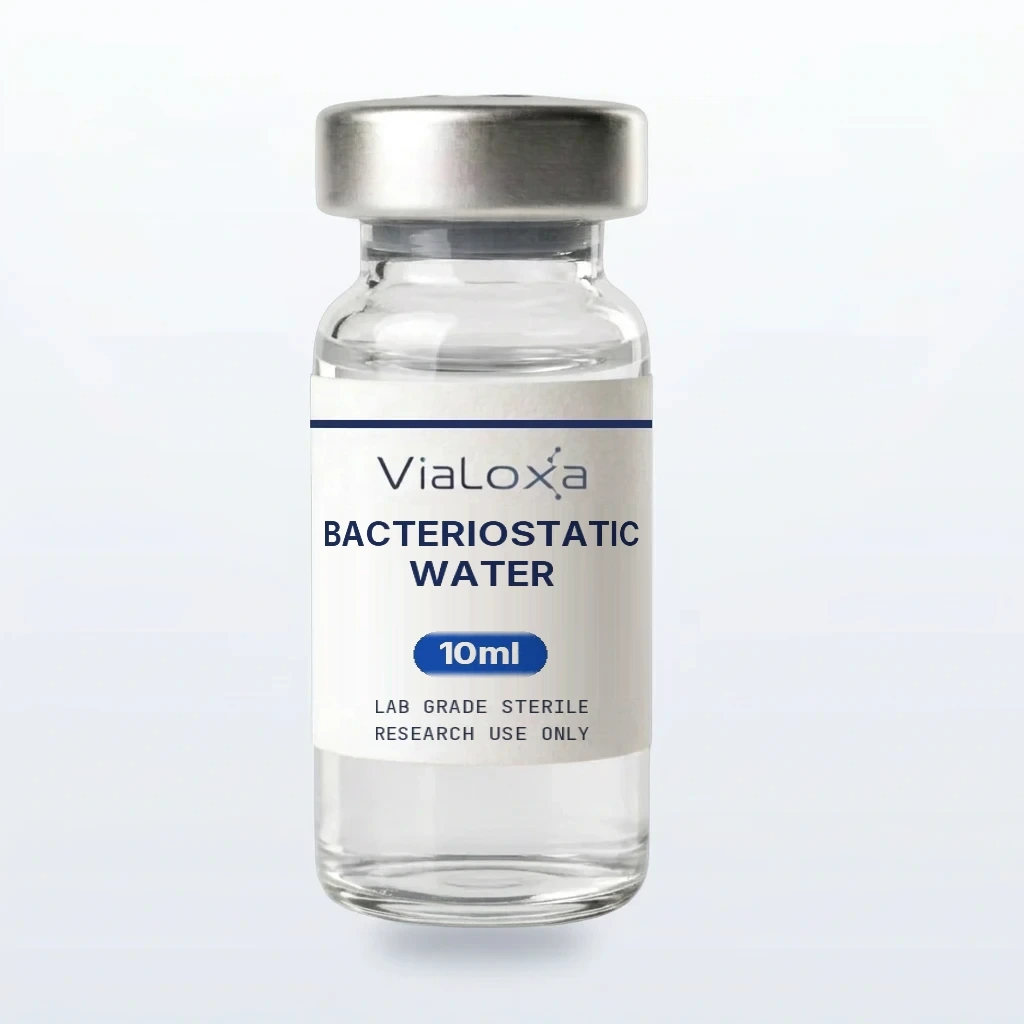
Bacteriostatic water - sterile water containing 0.9% benzyl alcohol - is the standard choice for multi-use reference vials because the preservative suppresses microbial growth across repeated septum punctures. Plain sterile water is appropriate for single-use preparations that are consumed immediately.
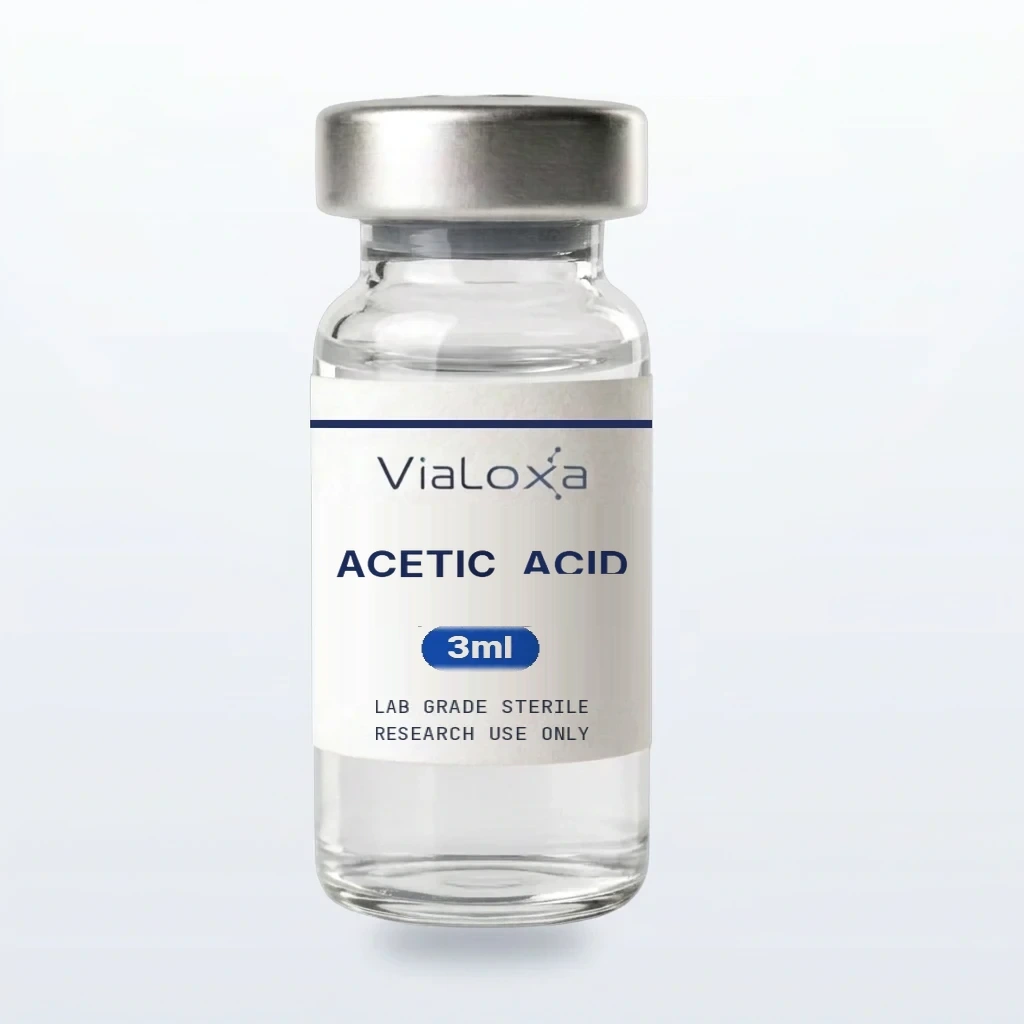
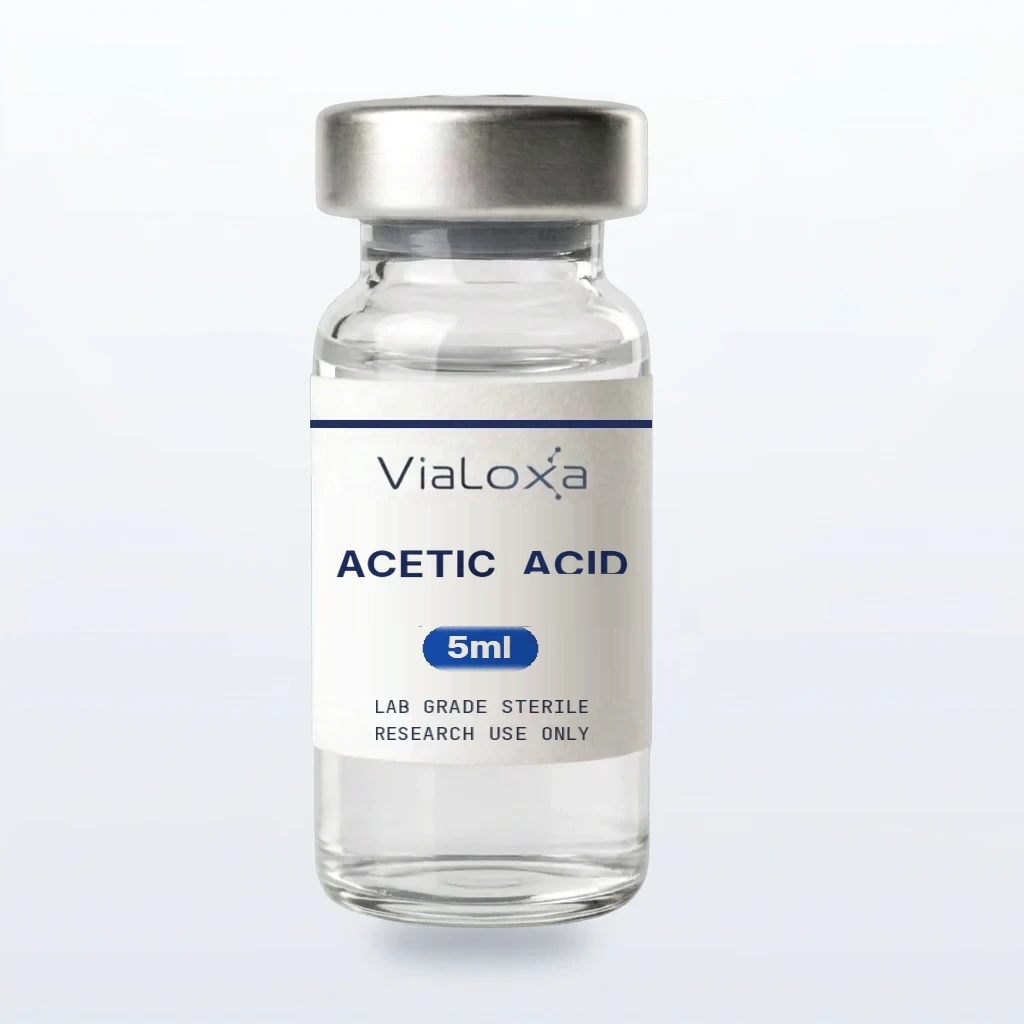
A minority of sequences are poorly soluble at neutral pH and need a small volume of dilute acetic acid to dissolve before being made up to volume. Peptides with a high proportion of acidic residues, and several of the bioregulator sequences, fall into this group. If the cake has not cleared after gentle agitation, an acidic diluent is usually the reason.
- Bacteriostatic water - repeated withdrawals from one vial over days or weeks
- Sterile water - a single preparation used the same session
- Dilute acetic acid - sequences that will not clear in water alone
3. Calculate the volume you need
Concentration is simply the peptide mass in the vial divided by the volume of diluent you add. A 10 mg vial made up with 2 ml of bacteriostatic water gives 5 mg/ml; the same vial with 5 ml gives 2 mg/ml. Choose a volume that puts your typical working aliquot into a range your pipettes measure accurately - very small withdrawals magnify pipetting error.
Record the net peptide content from the certificate of analysis rather than the label mass when precision matters. Lyophilised peptides carry counter-ions and residual water, so net peptide content is routinely below the gross fill weight, and the certificate states the figure for your specific lot.
4. Add the solvent slowly, down the glass
Angle the needle so the stream runs down the inside wall of the vial rather than jetting directly into the cake. Peptides are surface-active and shear-sensitive; a hard stream drives foaming, and foam means peptide is being denatured at the air-liquid interface.
Once the diluent is in, swirl or roll the vial gently between your fingers. Never vortex a peptide solution and never shake it. Most cakes dissolve within a minute; some of the longer or more hydrophobic sequences take several minutes and benefit from being left to stand rather than agitated further.
5. Inspect, label and store
A correctly reconstituted solution is clear and free of particulates. Cloudiness, visible strands or a residue that refuses to clear suggests either an unsuitable diluent or a degraded cake, and the solution should not be used as a quantitative reference.
Label the vial with the compound, lot number, concentration, diluent and date of reconstitution, then move it straight to refrigeration. Solution-phase stability is measured in weeks, not months, so the reconstitution date is the number that governs when the material should be retired.
Common errors that cost you accuracy
Most reconstitution problems trace back to one of a handful of avoidable mistakes. Each of them shifts the effective concentration or shortens the usable life of the vial, and none of them is visible in the final solution.
- Injecting the diluent directly onto the cake and generating foam
- Vortexing to speed up dissolution
- Using the gross label mass instead of net peptide content for a quantitative standard
- Leaving the reconstituted vial on the bench between withdrawals
- Reconstituting a cold vial straight from the fridge
- Failing to record the reconstitution date on the label
Worked examples: turning a label into a concentration
Concentration errors are the single most common source of irreproducible results with reference peptides, and almost all of them originate at the bench in the first ninety seconds of handling a new vial. Working the arithmetic out before the needle goes anywhere near the septum removes the problem entirely, because the only decision left is how much diluent to draw.
Take a 10 mg vial where the certificate of analysis reports a net peptide content of 87%. The vial therefore contains 8.7 mg of peptide, not 10 mg. Adding 2 ml of bacteriostatic water gives 4.35 mg/ml, not the 5 mg/ml the label implies. That 13% discrepancy is invisible in the finished solution and will propagate through every dilution made from it.
For low-mass vials the same logic applies with tighter tolerances. A 2 mg vial made up to 2 ml gives 1 mg/ml, which is convenient arithmetic but leaves you drawing very small volumes for a working assay. Making the same vial up to 1 ml and diluting a measured aliquot into buffer is usually more accurate, because a 100 microlitre withdrawal is measured far more reliably than a 20 microlitre one.
- 10 mg gross, 87% net, 2 ml diluent equals 4.35 mg/ml
- 5 mg gross, 92% net, 2.5 ml diluent equals 1.84 mg/ml
- 2 mg gross, 90% net, 1 ml diluent equals 1.8 mg/ml
- Always divide net mass by volume, never label mass by volume
Aliquoting after reconstitution
If a solution will be used more than a handful of times, split it into single-use aliquots immediately after it clears rather than repeatedly puncturing one vial. Every withdrawal introduces air, and every warming cycle between fridge and bench accelerates hydrolysis and oxidation of the more vulnerable residues.
Use low-binding polypropylene tubes or glass for dilute solutions. Standard polypropylene adsorbs peptide onto the tube wall, and below roughly 10 micrograms per millilitre that adsorption is a genuine, unrecorded loss of analyte that shows up as a quiet downward bias in your results.
Label each aliquot with compound, lot, concentration and date. An unlabelled tube in a freezer box is not a reference standard, it is a guess, and the effort of relabelling later always exceeds the effort of labelling now.
Documenting the preparation
Reproducibility depends on a written record that another researcher could follow without asking you a question. The minimum useful record is the compound name, lot number, gross fill mass, net peptide content, diluent identity and batch, volume added, resulting concentration, operator and date.
Where a solution feeds into a quantitative assay, note the storage location and the number of freeze-thaw cycles the aliquot has been through. Stability questions are almost always answerable from a good record and almost never answerable from memory.
- Compound, lot number and supplier
- Net peptide content taken from the certificate of analysis
- Diluent type and volume added
- Calculated concentration in mg/ml
- Date, operator and storage location
- Cycle count for any aliquot that has been thawed
When to discard rather than rescue a vial
A cake that has collapsed into a sticky film, discoloured, or refuses to clear after an appropriate diluent has been tried is not salvageable as a quantitative standard. It may still dissolve, and the solution may still look acceptable, but the purity figure on the certificate no longer describes it.
The same applies to any vial whose seal integrity is in doubt. Moisture ingress is cumulative and invisible until it is severe, so a vial found unsealed in storage should be retired rather than used for work that anyone will rely on.
Everything described here relates to unlicensed reference standards supplied for in-vitro laboratory research by qualified professionals. Nothing we sell is a medicine, and nothing on this page is medical guidance. See our research use disclaimer.
Frequently asked
- How much bacteriostatic water should I use per vial?
- There is no single correct volume - it depends on the working concentration you want. Divide the vial's net peptide content by your target concentration: a 10 mg vial at 5 mg/ml needs 2 ml, at 2 mg/ml it needs 5 ml. Pick a volume that keeps your usual withdrawal comfortably within the accurate range of your pipette.
- Can I use tap or distilled water?
- No. Neither is sterile and neither is preserved, so a multi-use vial reconstituted that way will support microbial growth and is worthless as a controlled reference. Use bacteriostatic water for repeated withdrawals or sterile water for a single-session preparation.
- Why will my peptide not dissolve?
- Usually the sequence is poorly soluble at neutral pH. Adding a small volume of dilute acetic acid first, then making up to volume with water, resolves most cases. Persistent cloudiness after that points to a degraded or moisture-exposed cake.
- How long does a reconstituted vial last?
- In solution, expect weeks rather than months under refrigeration, and considerably less if the vial is repeatedly warmed. Freezing single-use aliquots at -20 C extends usable life; repeated freeze-thaw cycling on one vial does not.
- Should I filter the solution after reconstitution?
- For most in-vitro work it is unnecessary, because the material is already purified and the diluent is sterile. If a protocol demands it, use a low-protein-binding 0.22 micron filter and accept that some peptide will be lost to the membrane. Filter after the cake has fully cleared, never before.
- Can I reconstitute two vials into one?
- Yes, and it is common practice when a higher total mass is needed at a single concentration. Dissolve each vial separately, then combine, and calculate the resulting concentration from the summed net peptide content and the summed volume rather than assuming the label figures.
- Does the order of solvent addition matter for poorly soluble sequences?
- It does. Add the small volume of dilute acetic acid first and allow the cake to clear, then make up to the final volume with water. Adding water first can leave an undissolved core that never fully clears, and the resulting solution will be below the intended concentration.